Exhibition Statement
"The history of art will fail to grasp the power of images so long as it remains confined to the tyranny of the visible. [...] Before the visible artwork, there was a demand for an "opening" of the visible world, one that revealed not only forms but also visual intensities acted, written, or sung; not just iconographic keys but also symptoms and traces of mystery."1
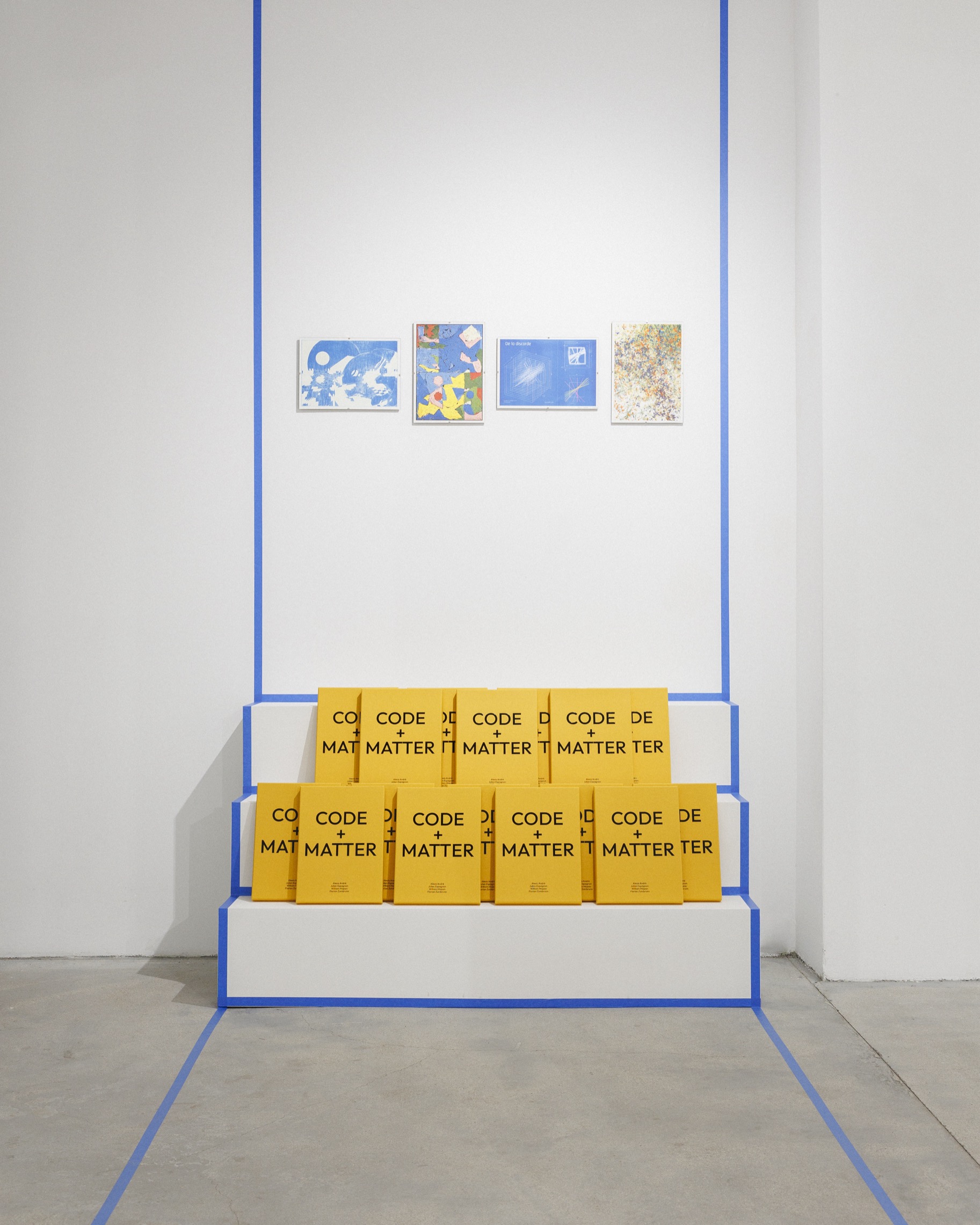
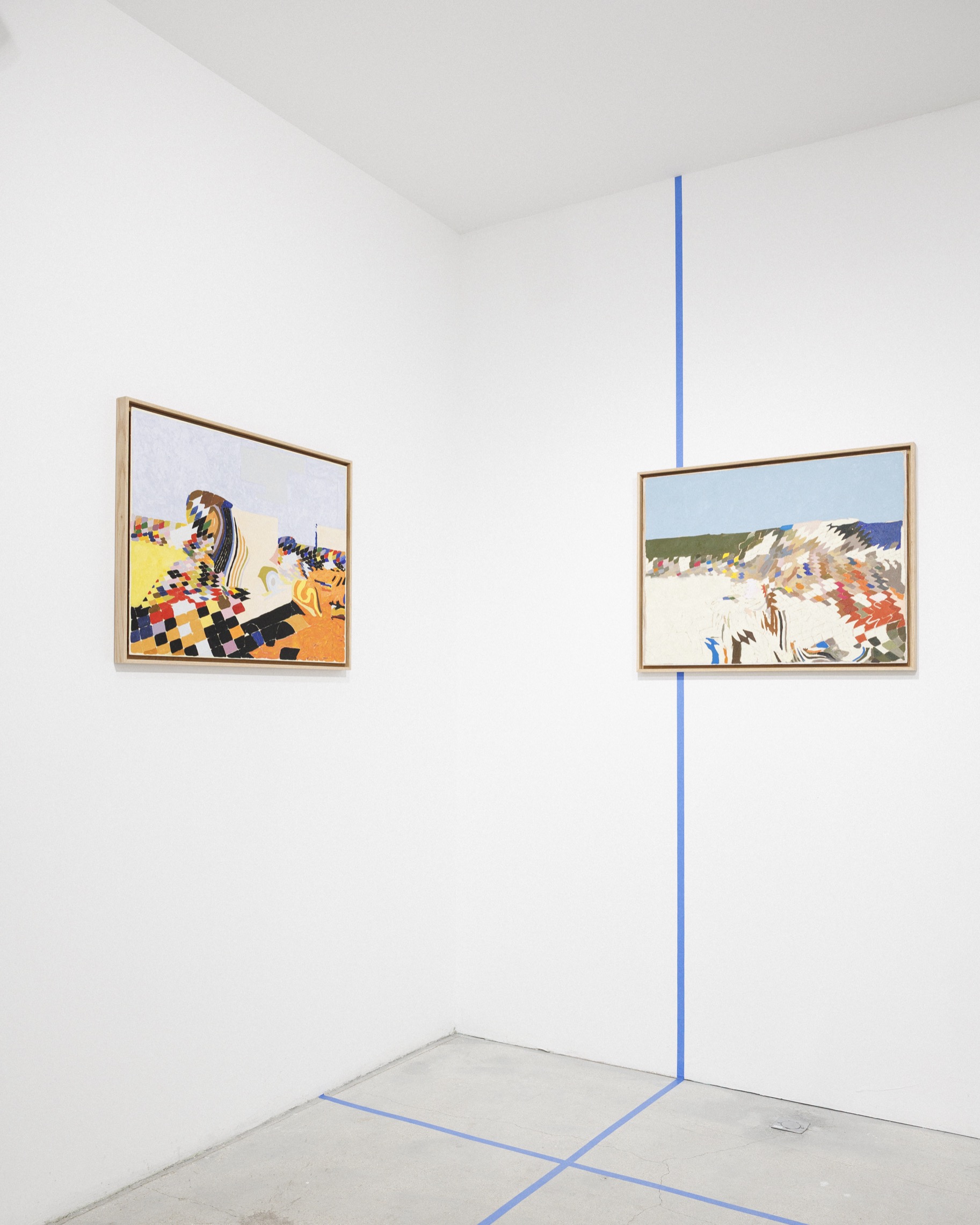
Whether painted, recorded through photography, or generated like the billions of deepfakes that flood the internet, images are not equivalent; they do not all convey, or mediate, the same thing. The works of Alexis André, Julien Espagnon, William Mapan, and Florian Zumbrunn resist easy categorisation. There is what one thinks one sees – drawing, painting, sculpture – and what is truly before our eyes: the carefully chosen variations of a complex algorithmic theme. Between the artist's intention and its physical form lies the work of code: artisanal, exploratory, transforming an aesthetic vision into algorithm, adapting it progressively until it finds its incarnation in the image again and again, at every iteration, at every click that sets the chain of visual production in motion.
The algorithm is like a vast reservoir of potential images; iteration is the act of fixing this near infinity into a singular occurrence – a passage from virtual to visible, a materialisation of mystery's traces. Once individuated from the field of possibilities, the artists project the image into matter. Through new alterations, they shift it from pure idea into image as an embodied sign.
In this completed chain, the image mediates the relationship between artist and code. The ever renewed dialogue between digital information and material results in a form of "continued birth":
"One says a man is born the moment what was, in the maternal body, only a virtual visible becomes visible both to us and to itself. The painter's vision is a continued birth."2
1. Didi-Hubermann G., Devant l'image : question posée aux fins d'une histoire de l'art, les éditions de Minuit, Paris, 1990, p.64.
2. Merleau-Ponty M., L'œil et l'esprit, (1960), Gallimard, Paris, 1964, p.32.
Alexis André
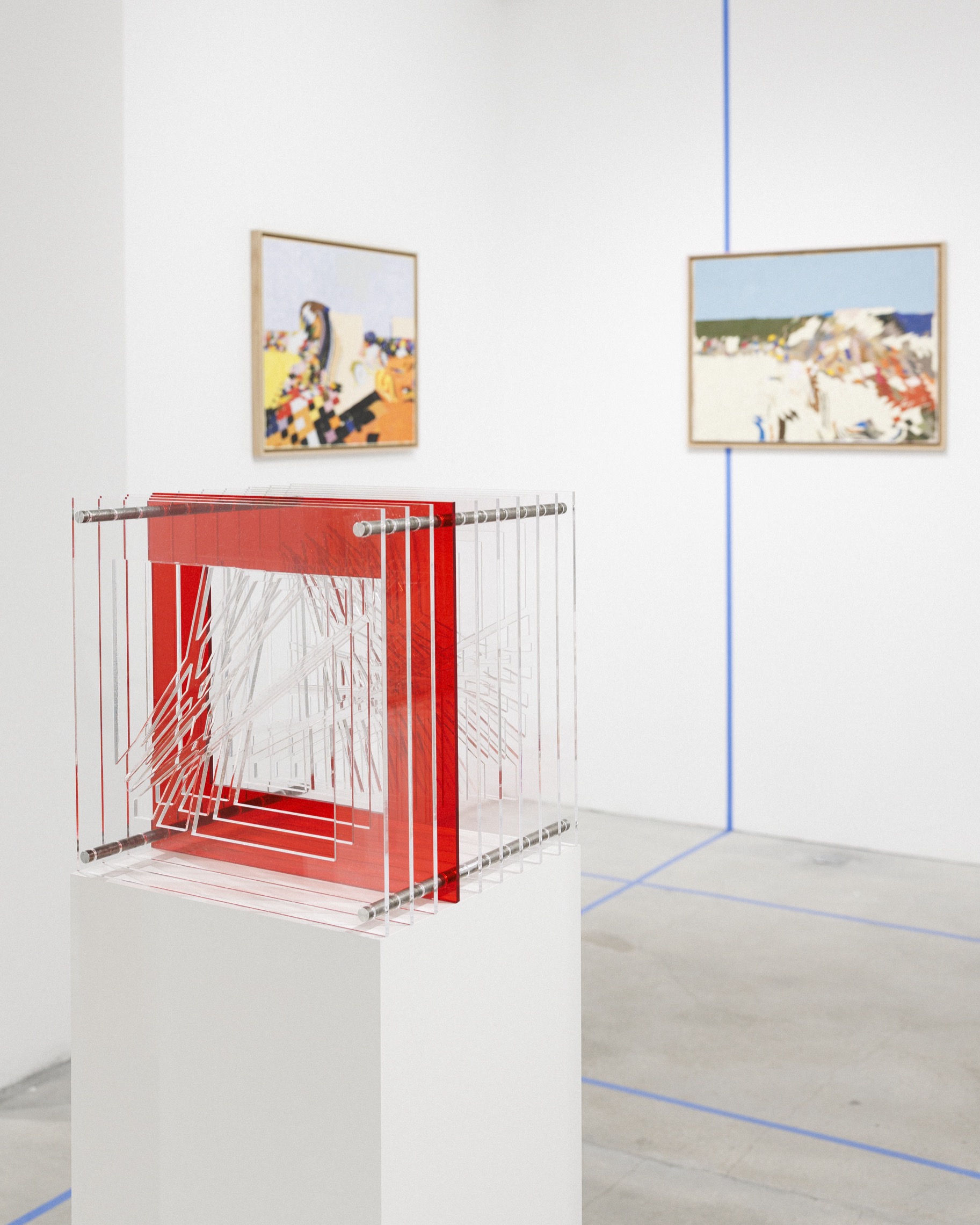
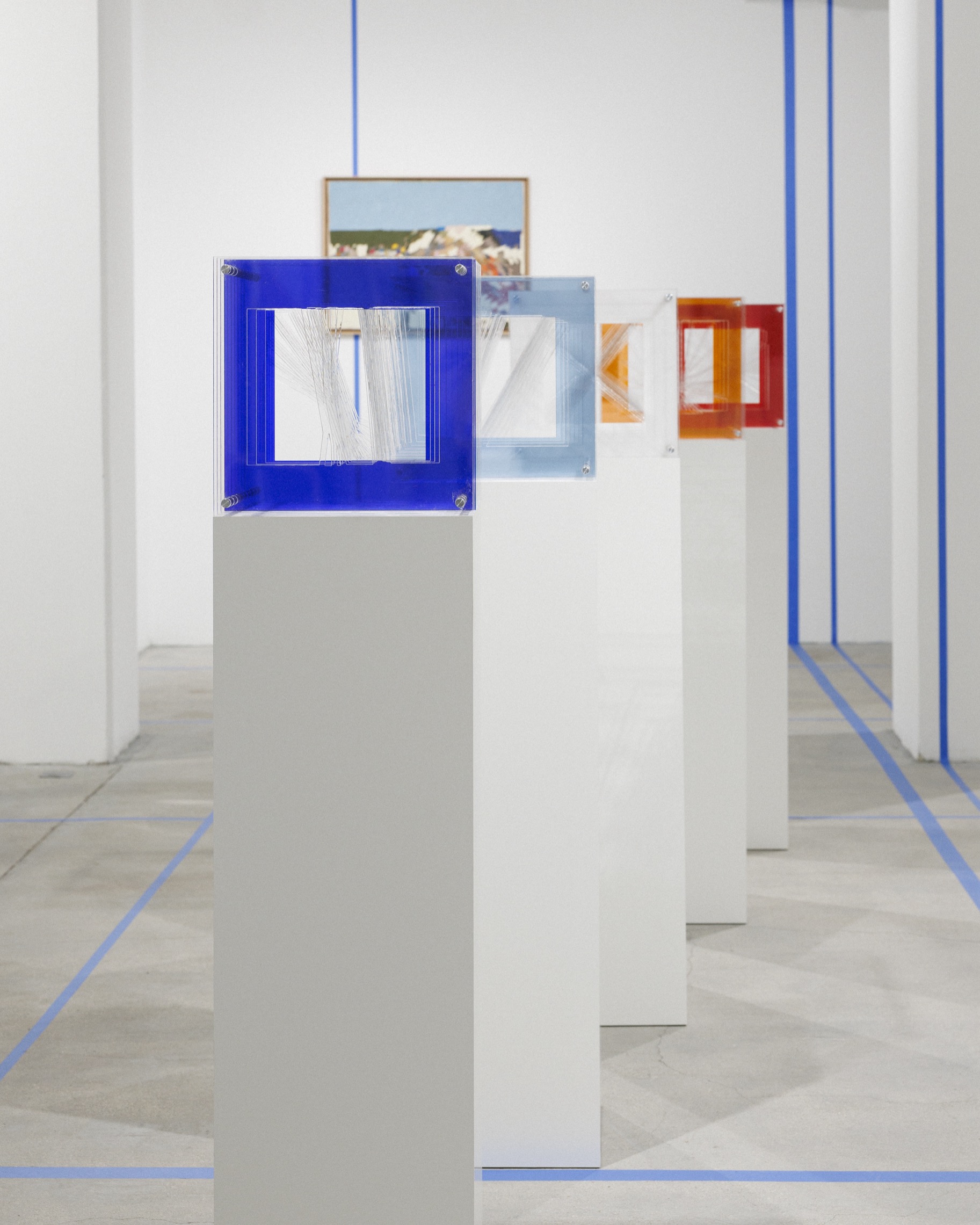
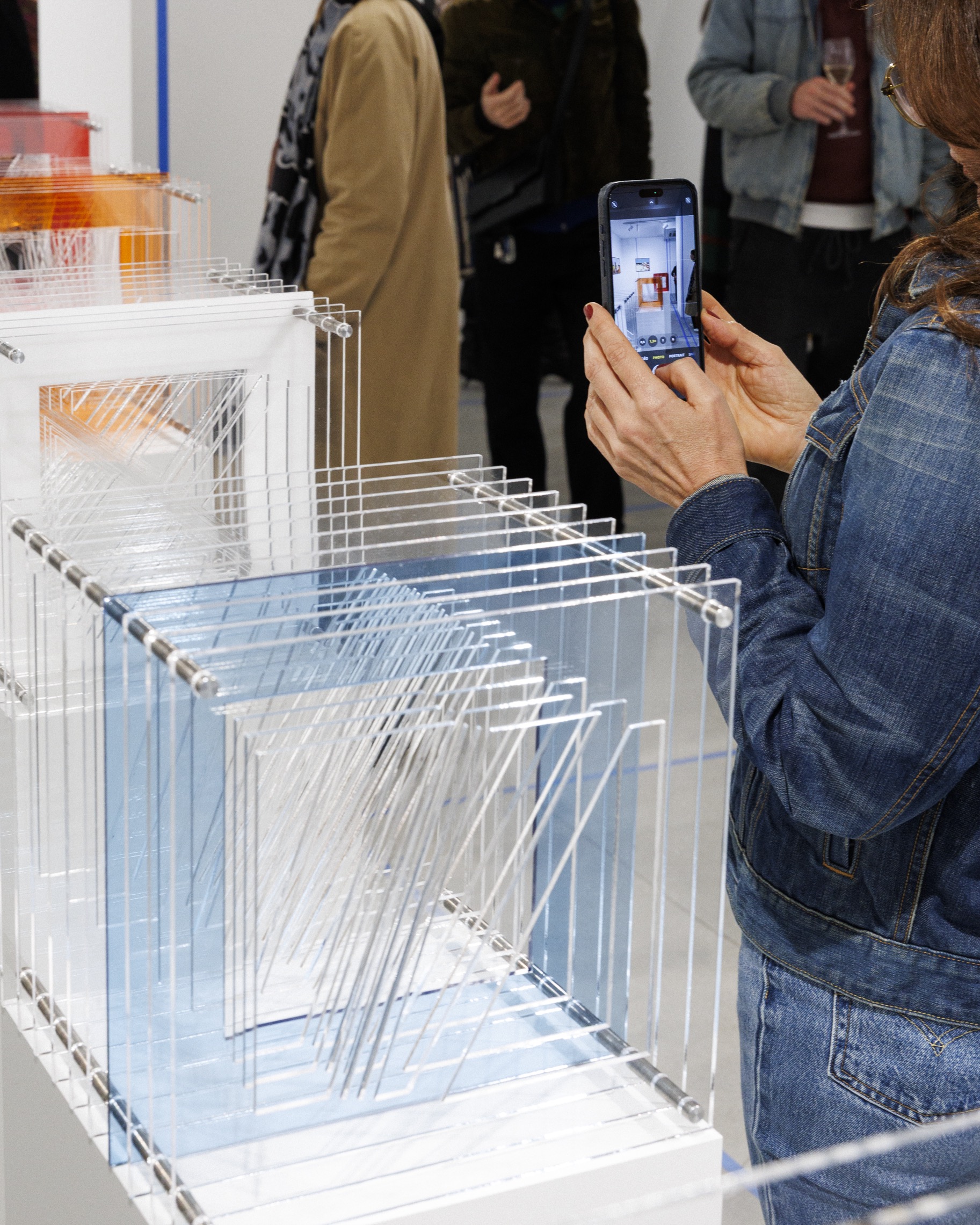
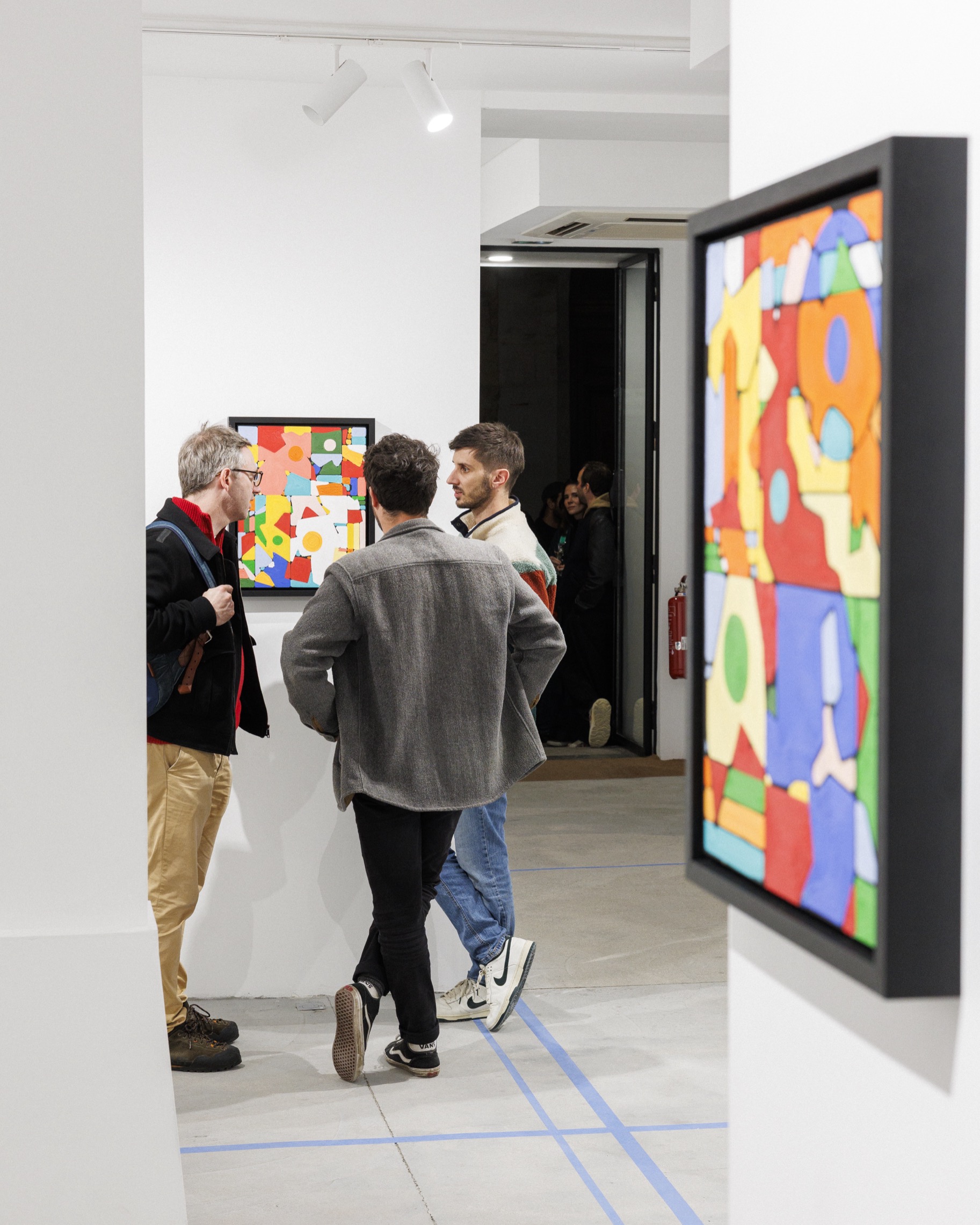
Alexis André's algorithms often rest on a dual sensation of apparently contradictory nature: something soft, hypnotic, a succession of subtle shifts with a decorative allure; yet also a rupture a grind, a struggle, the image as the outcome of conflict. Each iteration is the result of successive cuts, one leading to the next, each dependent on the last. The algorithm seeks to create aesthetically engaging variations in a sense, to train its own taste, or at least its capacity to produce compelling images while also revealing the cogs of discord, the relentless advance of a self sustaining struggle. Once formed, this succession of layers may be projected into three dimensions, anchored in matter by laser cutting: the cuts give rise to planes, their superimposition to perspective, and the image, finally, to a space for mental projection.
Julien Espagnon
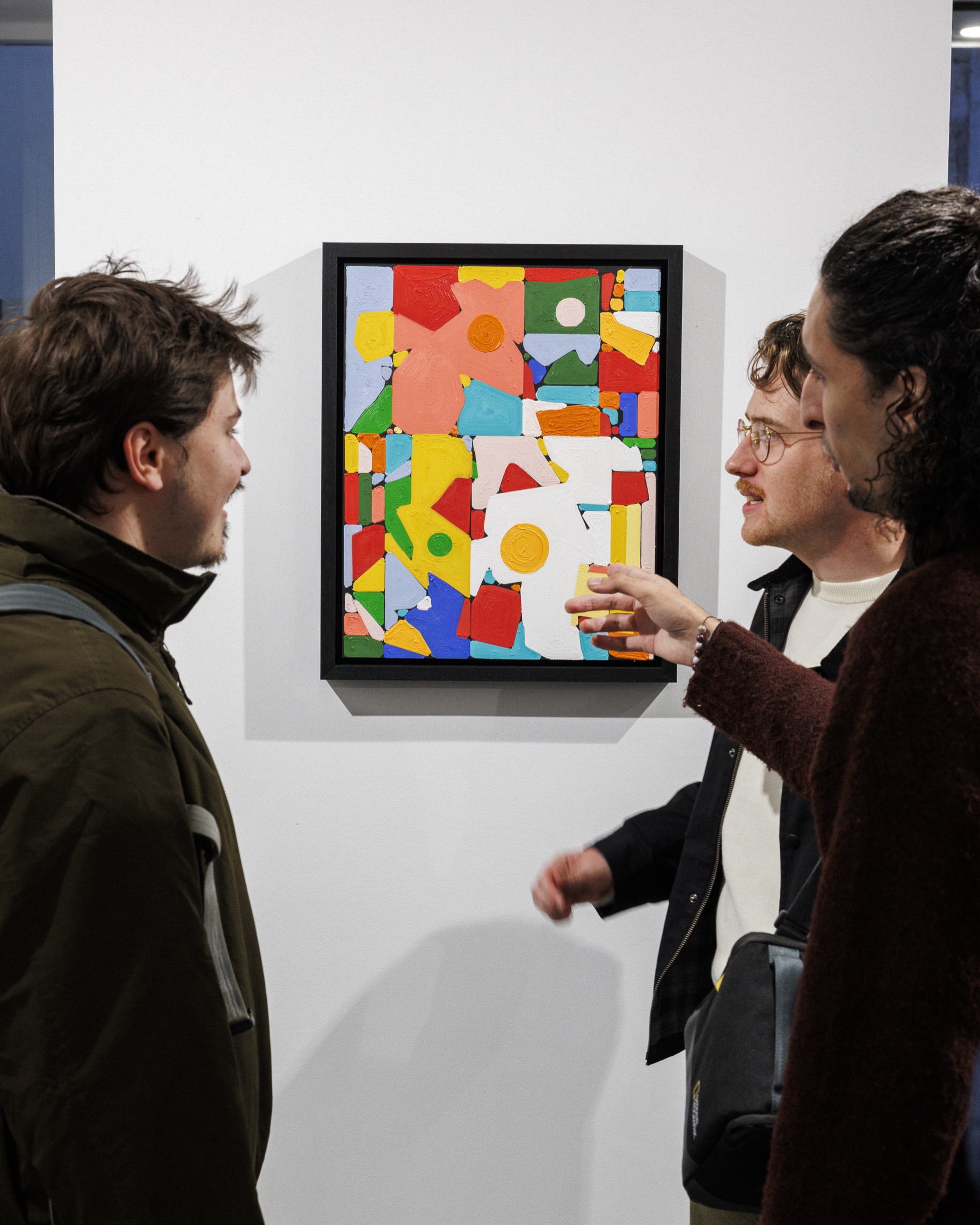
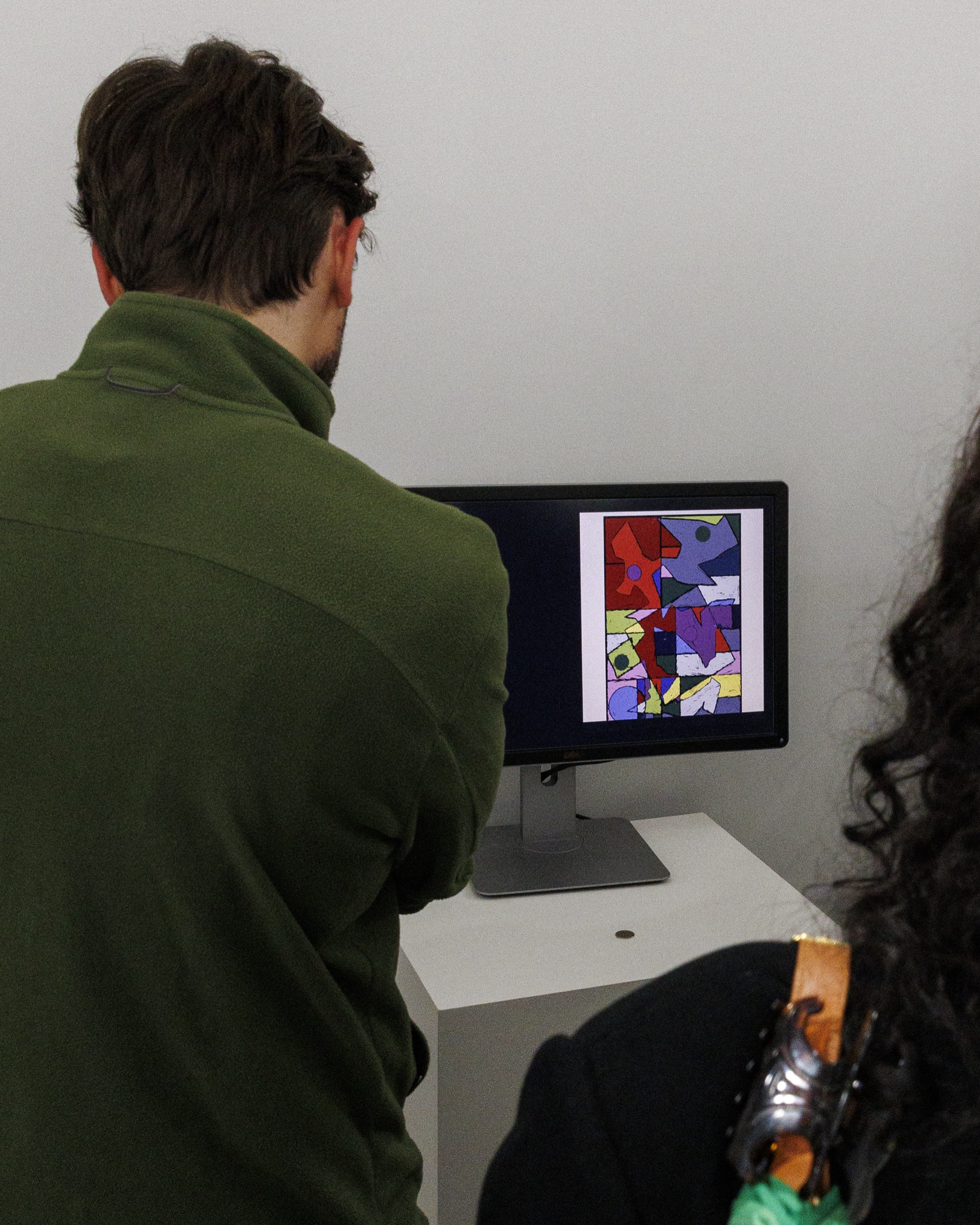
The back and forth between digital information and physical realisation is central to Julien Espagnon's practice. He designs his algorithms to drive a plotter or mechanical arm. There is thus a clear separation between the "mental" image and its physical counterpart, yet also a fundamental interdependence: the first gives birth to the second. This essential relation determines the algorithm's work, which the artist continually adjusts, testing its efficacy. Once parameters are set, the human hand is withdrawn entirely, leaving nested randomness to produce the image randomness at least partly directed beforehand. Recently, Espagnon has been experimenting with plotter painting, extending his research into form and colour. At times he enters into dialogue with the Orphism of Delaunay, Kupka, or Kandinsky; elsewhere he develops an abstraction that grows more gestural and intuitive, recalling aspects of American Abstract Expressionism.
William Mapan
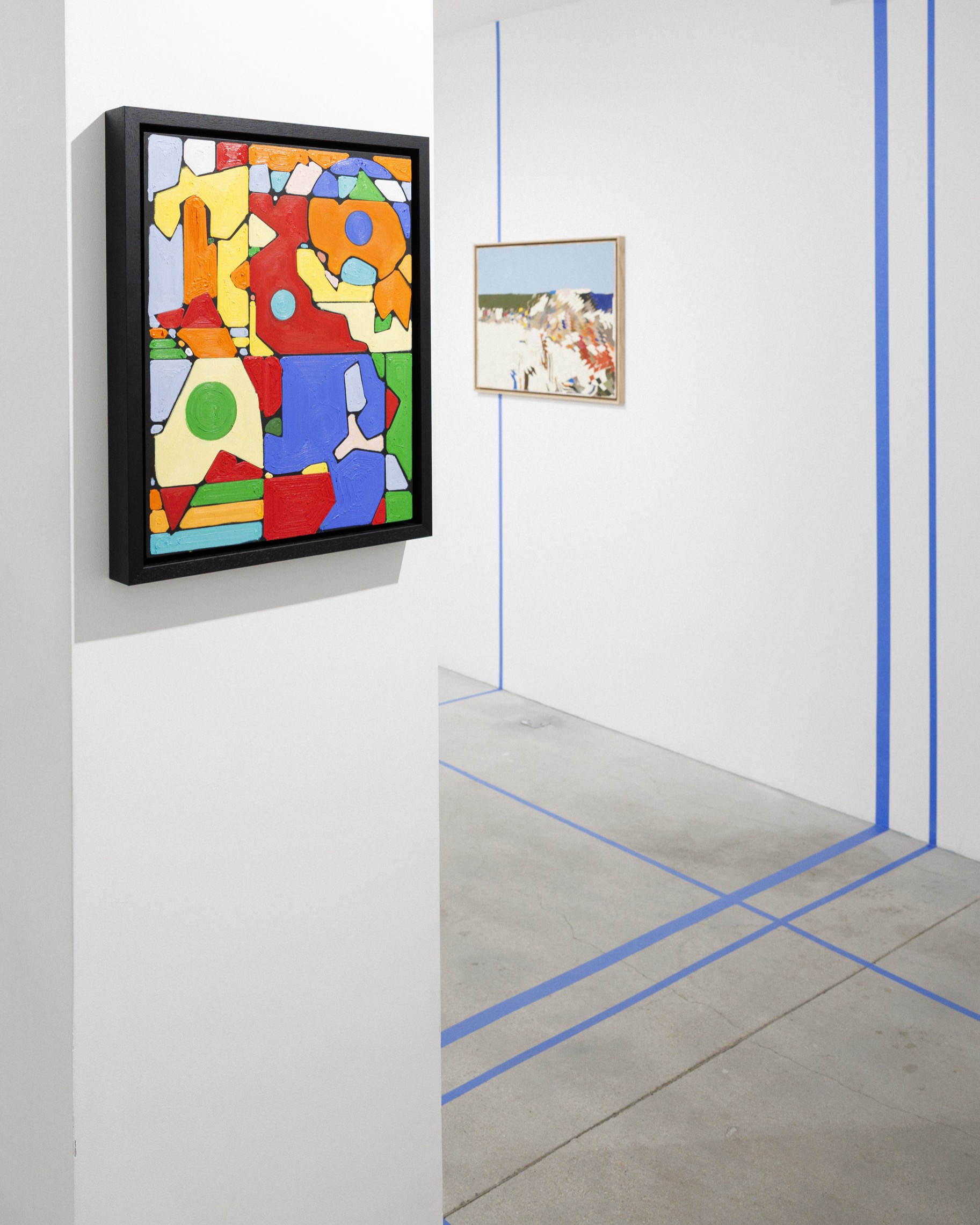
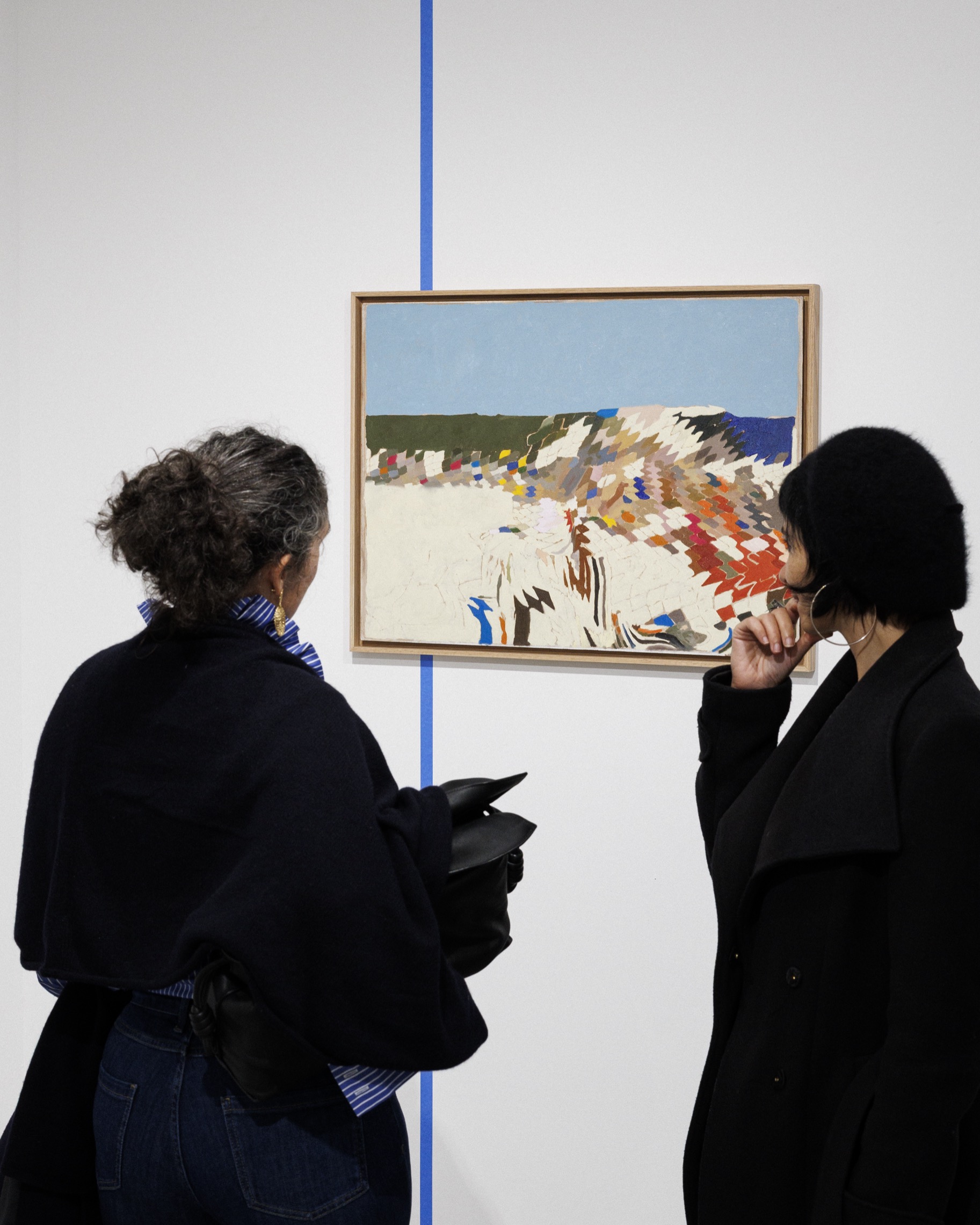
William Mapan's visual work might be described as meta painting: a search for what encompasses, underpins, and exceeds painting itself. Seeking to bridge the physical and the digital, he paints, fills sketchbooks with drawings, and explores the mechanics that guide his images' emergence. Material accumulates on paper, graphite grazes the surface – leaving imperfect traces – the hand moves back and forth, gestures follow one another, colours overlay, producing visibility. In a kind of abstraction of painterly action, Mapan deciphers and translates these physical phenomena into code, training algorithms to draw or paint "in his manner," to reproduce his touch. In this sense, he develops an algorithmic mannerism, with code exploring the many forms his painting might take borrowing and amplifying his style to generate a multiplicity of works. It is an art of repertoire.
Florian Zumbrunn
Echoing the painting of Monet, Renoir, or Sisley, Florian Zumbrunn's practice is rooted in nature landscape, its nuances, colours, and light, its perpetual changes through day and season to capture an impression, to explore its variations through iteration. Trees form the raw material of his algorithms. Inscribed in each generated image, they structure its apparent abstraction. Like a memory slowly fading, they suggest presence while revealing absence a diluted trace, a reflection linking the artificial image back to the natural, guiding the gaze toward memory. Zumbrunn's work then returns to matter, incarnating and evolving. Often printed onto paper, the image is further heightened pastel or oil applied in response, textures added, gestures reintroduced, opening a dialogue with the image itself.
Exhibition Views
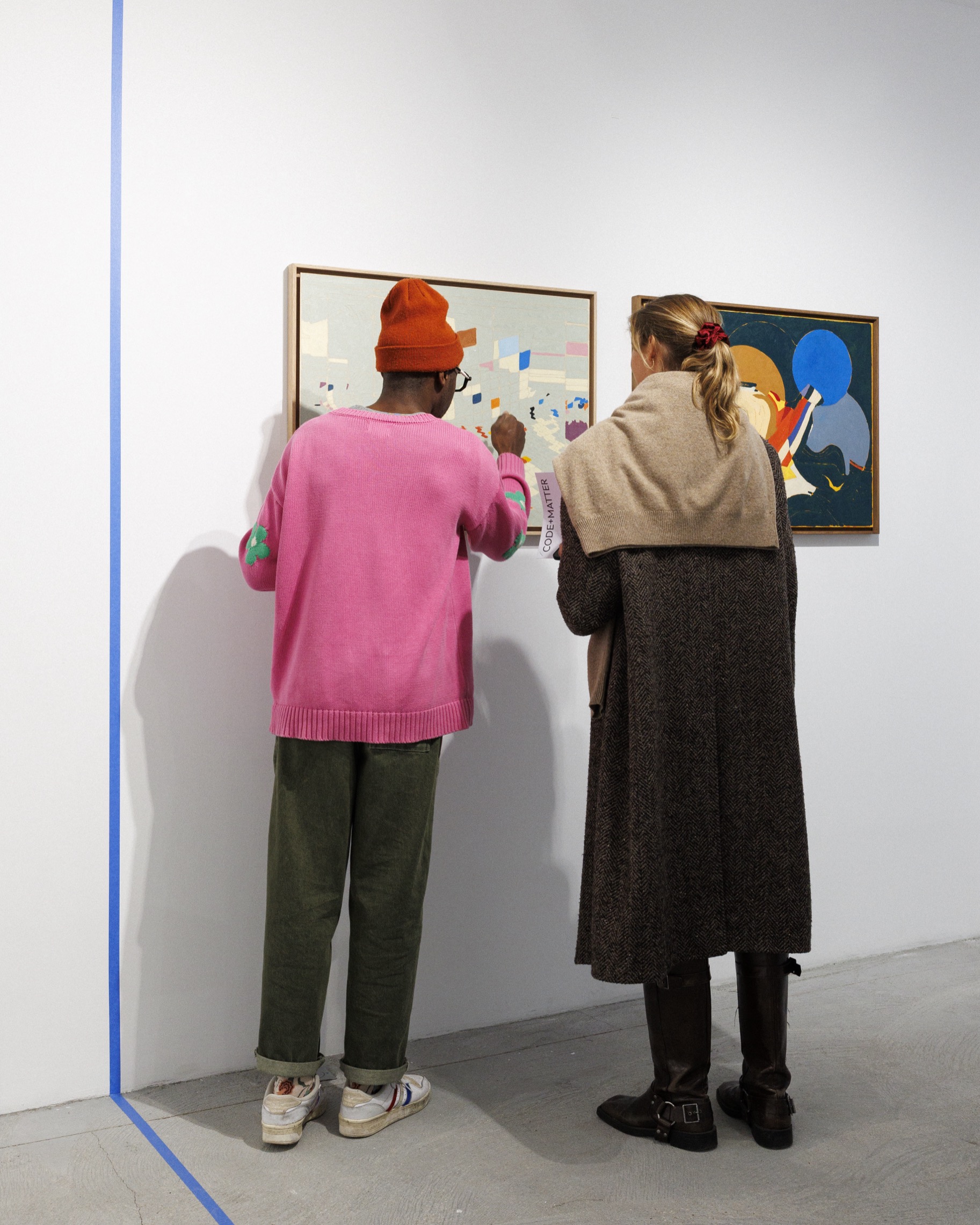
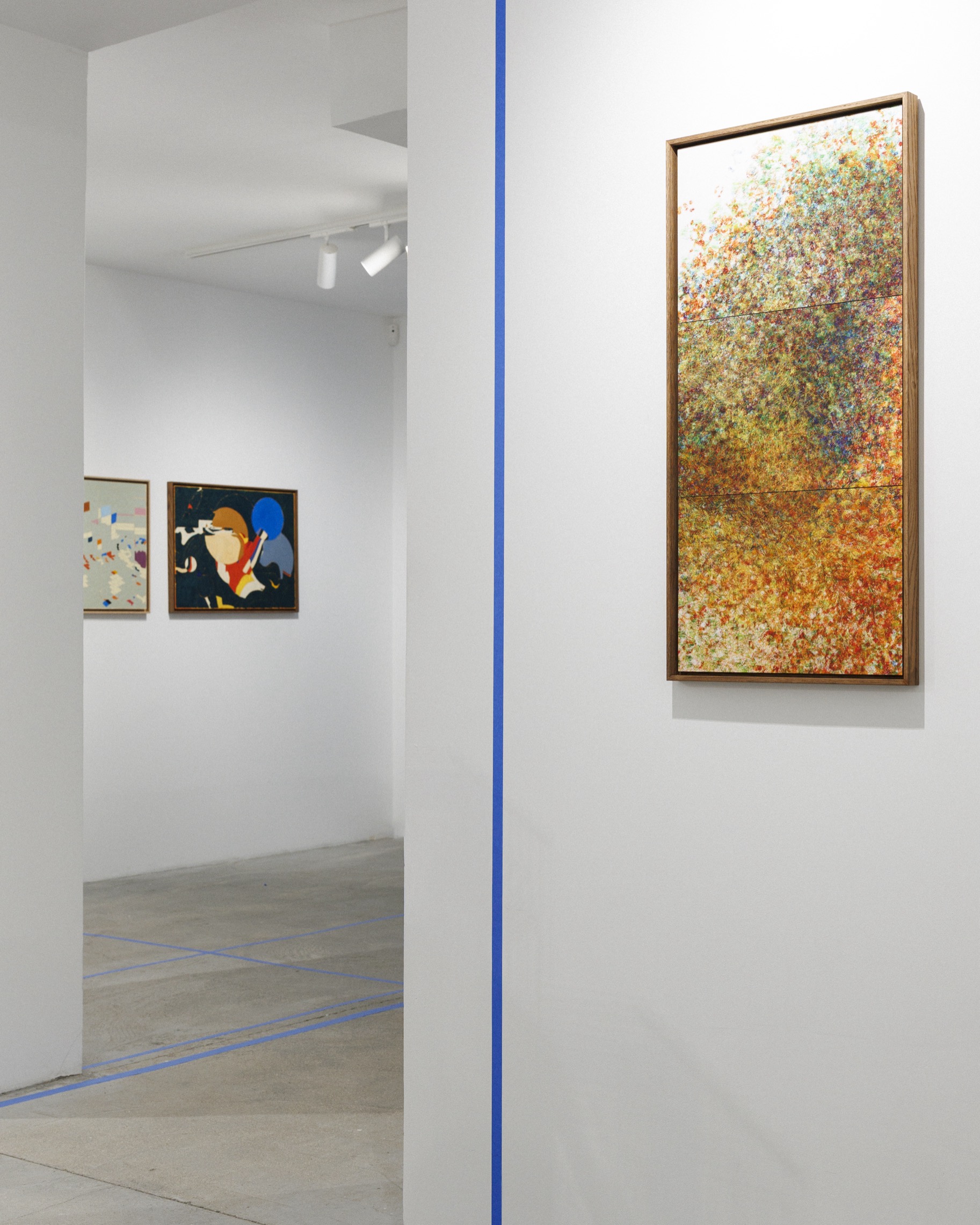
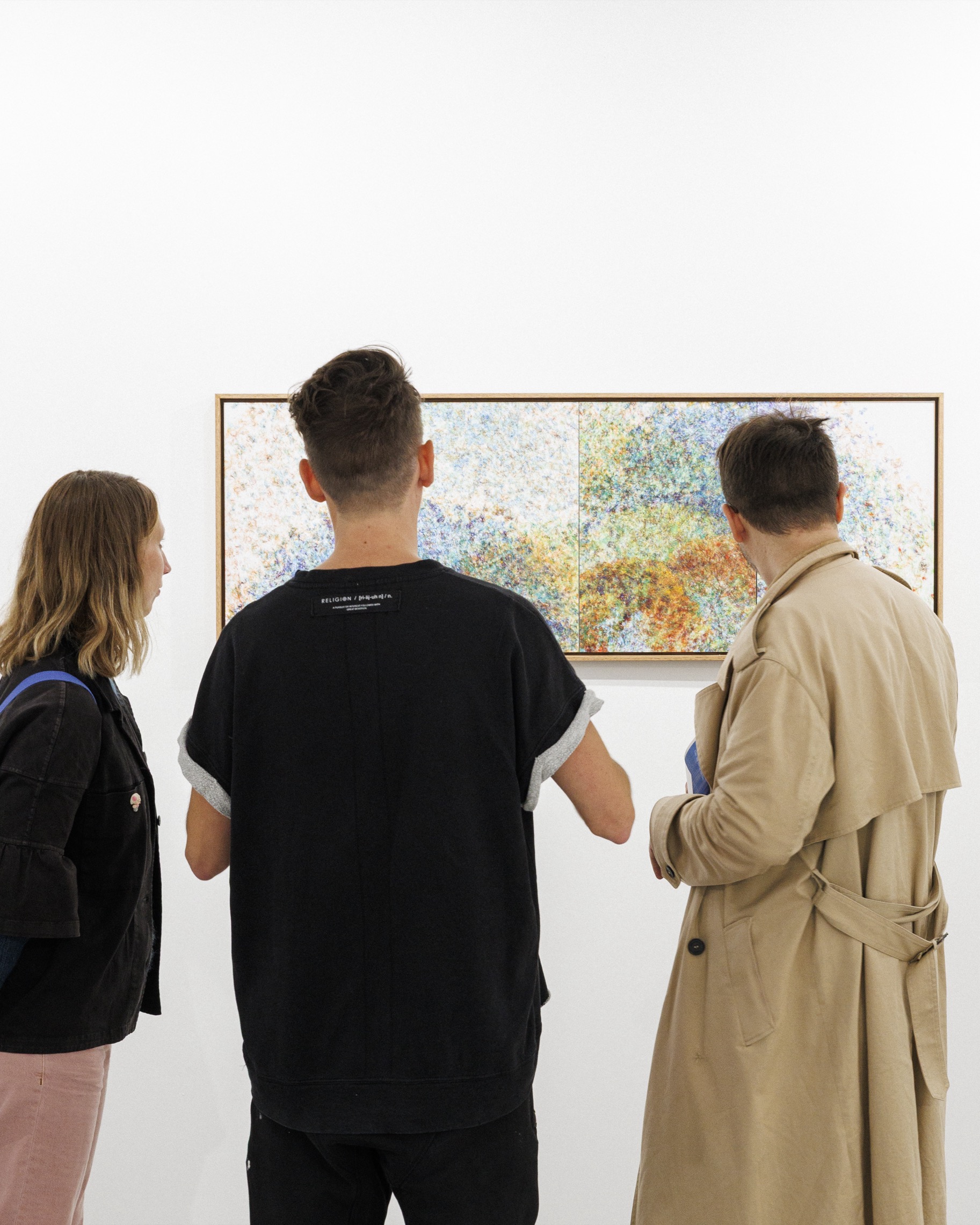
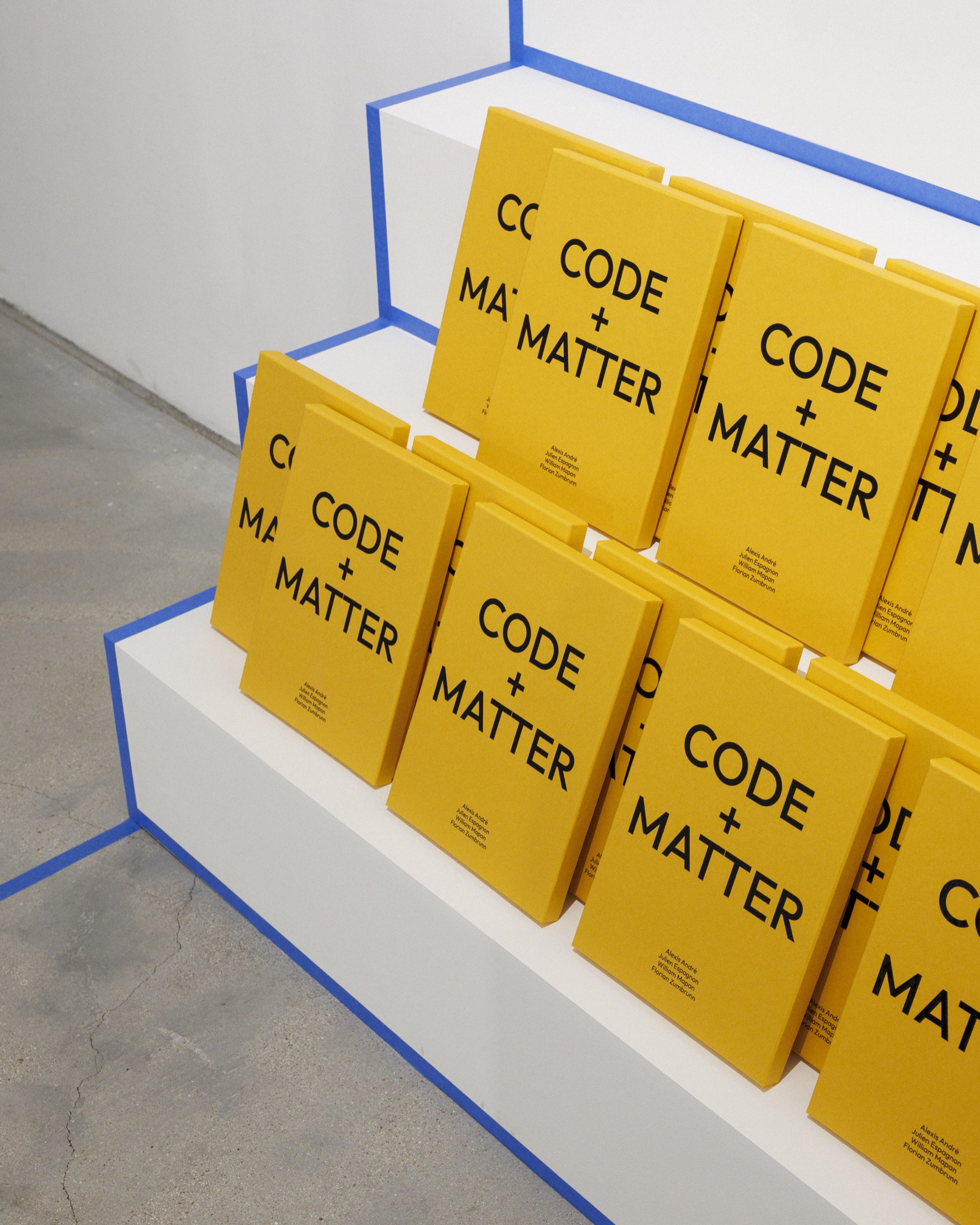
Photography © Martin Cayssilié